State ban to remove cell phones from classroom environment
Cell phones will officially be out the window when it comes to the classroom following passage of 2025 Wisconsin Act 42, which gives schools until July of 2026 to ban phones from educational environments. The constant competition with cell phones has been a contentious debate in the world of education as teachers struggle to engage pupils in critical thinking as opposed to screen time. Wisconsin isn’t the first with this idea; it’s officially the 36th state to adopt a bill in order to stop cell phone usage while class is in session.
The bill states that schools in the state of Wisconsin must have a policy that moves the cell phones away from the student, a policy West has already put into place. Senator Rachael Cabral-Guevara, Wisconsin State Senator representing the Fox Valley and author of the phone bill, emphasized its importance in local schools.
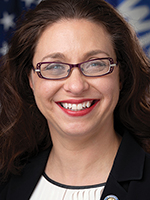
photo courtesy of Wisconsin State Legislature Website
“So, when we’re looking at things that might hinder students’ ability to perform well in school, one of the things we talked about was the ability to be on a phone and social media all day,” she said.
According to Cabral-Guevara, students aren’t the only ones who will be impacted by the bill.
“What we found is that not only students, but adults also are always messing with the phone,” she said. “Some teachers and adults were contacting us and said, ‘you know what, let's put something into place, a ban on phones during class time’.”
Math teacher Kimberly Kargus-Myers sees active distractions in the classroom disappear without the phones.
“I think the biggest thing is that distractions have gone down a lot,” she said. “Even when cell phones are right in front of us, we still feel the vibration in the pocket and it distracts us, and I think that’s the biggest thing that’s helped.”
Kargus-Meyers sees that social skills and focus in her math classroom were greatly improved by a lack of screens.
“I’m seeing fewer distractions; I’m also seeing students engaging with each other better,” she said. “I’m seeing better conversations because they’re not distracted by something else. They’re focused more on the lessons.”
American Government teacher McKenna Levanetz also shared how she saw the positive effects of the cell phone bill.
“As an educator, the cell phone restriction can be a great thing as it allows students to be more engaged with the things happening within my classroom. Students will be putting more focus and attention to the task at hand rather than events happening outside the room,” she said.
Levanetz also gave credit to a lack of cell phones for more student interaction and engagement in education.
“The overall educational environment benefits, but so does the classroom community,” she said. “When electronics are removed, there is more peer-to-peer interaction and active engagement with the material allowing students to participate more effectively.”
Cabral-Guevara believes the bill, and resulting policies, will remove stress from the classroom.
“Other states are doing this, and they seem to benefit from it, so why not take away that distraction? So not only for students’ benefit to learn more, but the teachers’ benefit so they don’t have to constantly say ‘put away your phone, we're not going to be doing that right now’,” she said.
Cabral-Guevara pointed out this act is still in the early stages, and it’s not a complete ban for cellar devices the entire school day, despite popular misconceptions,
“The bill in essence says you could use it during lunch or in the hallways and so forth,” she said. “Some places have a 100% ban; you can’t have them at the school day at all. The gentleman in the (Wisconsin State) Senate came to me with that idea. And he’s brought it up, and we haven’t put it in any legislation, but there's been some talks about it. But as of right now, we just want to see this, and see how this goes.”
Cabral-Guevara believes the change will help student well-being in the long run.
“There’s been a lot of research done that shows exposure to social media, constant flicking through reels, impacts students’ ability to learn and lowers attention spans,” she said. “There are also things like depression, anxiety, and self-esteem issues, linked to social media, and so maybe decreasing is a good thing.”
She acknowledges how many benefits come from less time spent on screens, shedding light on the personal aspect of it.
“The catch is you can go home and do all that stuff, too,” she said.
Many parents were concerned that their children would not be able to access their phones, primarily for emergencies that could arise.
“There were a couple things in committee that came up that I thought were interesting; we had some parents that testified that said that they said they did not like this all,” Cabral-Guevara said. “You would expect the students to say this right, but some parents testified and said if there is an emergency at school, I want my child to call me quickly, to text me quickly if there is an emergency.
On the contrary, Cabral-Guevara said that law enforcement highlighted the crisis that can form when there is too much distraction from cell phones in a crisis situation.
“It was interesting that the police officers said if there’s an emergency, the last thing we want them to be is on their cell phones, we want them to be getting out of the school, being safe, or what their instructor tells them to do,” she said. “I haven’t thought about that; if you’re not distracted by your phone in an emergency you should be prioritizing safety over a call or video of what’s happening.”
Though this decision was made on a state level, Senator Cabral-Guevara made it clear that it wasn’t only legislators’ ideas that came up with the bill, but concerned adults that see the effects it has on students every day.
“I also think it’s not all these ‘awful people’ down in Madison coming up with this; it’s adults and teachers coming to us, henceforth why we did something down in Madison,” she said.
Math teacher Kimberly Kargus-Myers shed light on the captivating quality of cell phones, and how she feels in competition with them for student engagement.
“As a teacher, it’s my job to teach the lessons and standards I am tasked with,” she said. “It feels difficult to compete with cell phones because they are entertaining, and they are addictive.”
Levanetz sees the effects of technology and how it deteriorates connections with others.
“It’s all about human interaction. I think we have fallen into the habit, as a society, of living through screens,” she said. “By removing them and encouraging human interactions, students, teachers, and people in general can become more present in their relationships with one another.”
Though getting used to higher cell phone regulations may be initially challenging, Levanetz believes the outcome will outweigh the struggle.
“While I think the adjustment to no phones is difficult, I can only see it being beneficial in the long run. Not only will communication skills strengthen but so will attention spans and work ethic,” she said. “These are skills that not only help kids become better students but skills that will benefit them no matter what they do after high school.”
by Kaylee Beck
Published December 1, 2025
Oshkosh West Index Volume 122 Issue III