Budget deficit leaves OASD leadership scrambling for answers
The Oshkosh Area School District [OASD] faces tough choices as a $6,000,000 deficit has been projected for the upcoming 2026-27 school year. As enrollment numbers fall and monetary tension increases, the district looks for answers on how to preserve student resources.
According to Principal Rebecca Montour, the state’s economic formula has not adjusted appropriately to shifting times and monetary trends. .
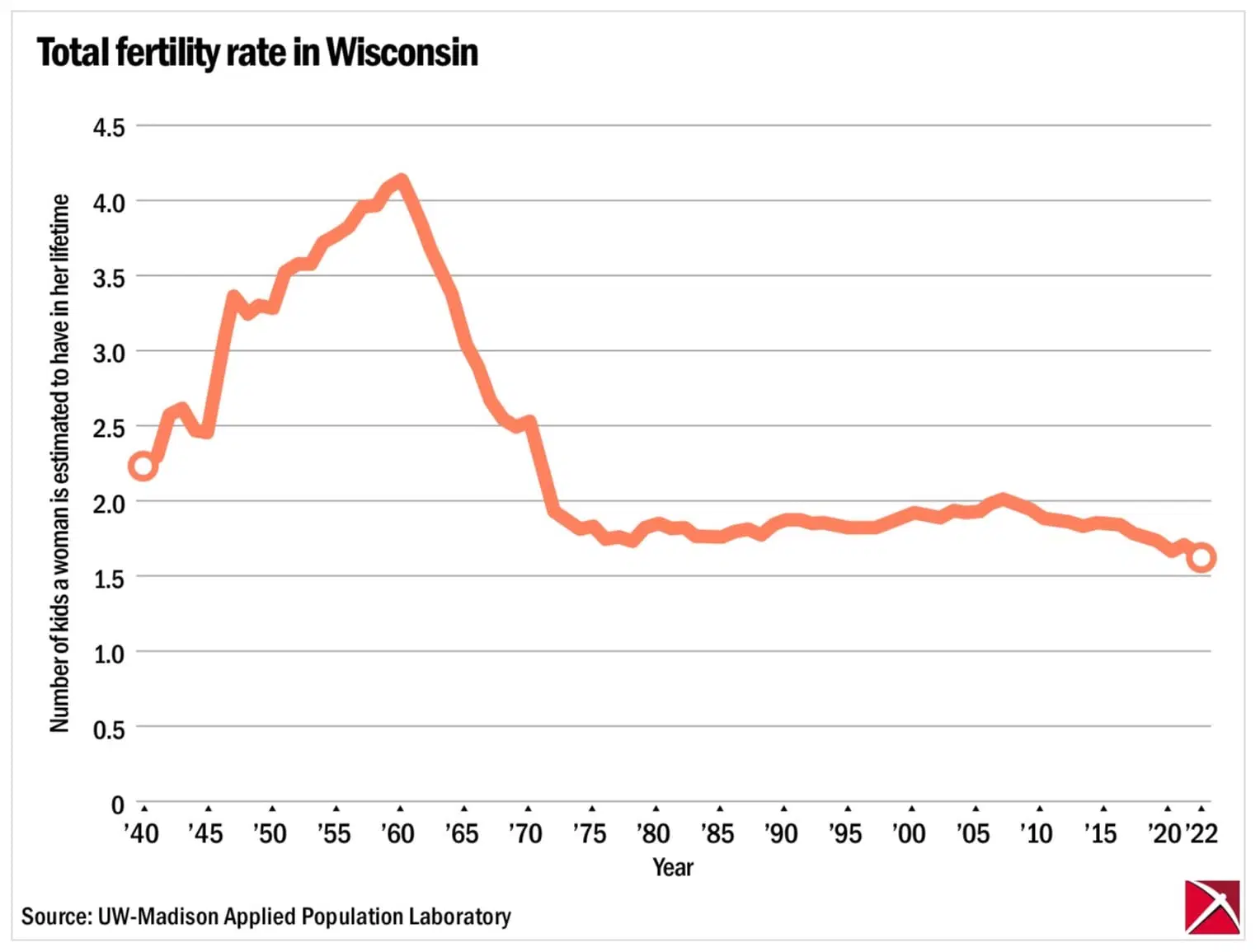
photo courtesy of Wisconsin Policy Form
“This deficit is happening partly because of the way our state funding works for public education. For every student enrolled in a public school, we get a certain amount of money from the state,” she said. “However, that amount of money has not changed over the years even though inflation happens over time.”
In addition to the state formula, Social Studies Department Chair Patrick Bertram noted that almost 200 students left the district in total and turned to other learning alternatives, swelling the deficit in unexpected ways.
“We have around 177 people transferring elsewhere, whether that be homeschooling, internet-based learning, enrolling in private schools or public schools like Neenah or Winneconne,” he said.
The projected decrease in student enrollment was on a far smaller scale and wasn’t expected to affect the district much; however, nearly 200 students missing leaves the OASD with significantly decreased revenue.
“In the past, a difference of 10 or 12 people was expected between school years, but almost 200 students not coming here is much different,” Bertram said. “There’s a lot of money involved, around $11,000-$12,000 we get from the state per student. That adds up.”
West is not the only school dealing with unexpected shortfalls, according to Montour.
“We don’t exactly know how we’re going to address the deficit yet, but there are going to be cuts district-wide,” she said. “Due to state funding issues, a lot of public schools are struggling with their finances right now.”
Decreased student numbers are consistent across the state, which isn’t coincidence. Besides inflation over time, OASD Superintendent Dr. Bryan Davis recognizes that diminishing birth rates also play a role in the formation of the deficit.
“During the past 20 years, birthrates in Wisconsin peaked around 2007 and have been declining from that point on,” he said. “Between 70-75% of school districts in the state are declining in enrollment.”
Due to large-scale deficits, many school districts have been looking to other sources for supplementary funding. Referendums, or policy questions that have been brought down to locality for a direct vote, have been held in the past and will likely continue to be needed in order to address this.
“A lot of school districts are going towards operational referendums, which could lead to them collecting more money than the state revenue limit has for us. Most districts in our area have done that,” Davis said. “We had ours approved back in 2020.”
According to Davis, the district is prepared to make considerable internal changes to take on the uncertain future budgets.
“The district anticipates to be down about another hundred students next year,” he said. “So we need to make some structural changes going forward.”
These structural changes remain uncertain, but Davis expects them to alter how the OASD handles their limited funding.
“We are taking a look at our entire system, from programming to staffing to materials and other expenses we have,” he said. “We are working on finalizing some recommendations for reductions in expenses that we’ll bring to the school board in December.”
One possibility would be to raise the student to teacher ratio even higher across all classrooms to cut back on staffing. Currently, department chairs are charged with keeping classes around 27:1 during staffing. While exceptions have been made in the past to run classes, that might need to change..
“The goal is to have around 27 students per class, but if they feel like a class would be beneficial to have, it might run with fewer than that,” Bertram said. “They generally don’t want to limit opportunities for kids.”
Despite the possibility of significant changes, Montour insists the district plans to put the needs of students first in the decision-making process.
“We’re doing everything we can to not cut programs and opportunities for kids,” she said. “With every decision being made, that’s at the forefront.”
by Phoebe Fletcher
Published December 1, 2025
Oshkosh West Index Volume 122 Issue III