Athletes, from pro to high school, balance field of competition with mental health
It goes without saying that athletes, particularly pro athletes, undergo significant mental stress. Pros must devote countless hours and an unbelievable amount of mental and physical energy to even be competitive in their sport, and naturally this can have a major impact on mental health. A common understanding of this fact, along with the recent de-stigmatization of mental illness that’s transpired in the last decade or so, has made way for a relatively new professional field focused on wellness: sports psychology.
Sports psychologists, professionals who help athletes manage their focus and mental health, have prioritized the mental aspect of recovery after being sidelined by injury. There’s a general understanding that many athletes, when sidelined by injuries, experience intense psychological grief. However, in spite of this increased awareness and advocacy for athletes’ mental health issues, especially when it comes to injury recovery, many pros continue to struggle.
A recent tragic example of this continued struggle occurred in February, when Minnesota Vikings wide receiver Rondale Moore took his life with a firearm in his garage. Only 25, Moore missed the last two years of his career to injury, having suffered a season-ending left knee injury last preseason, and a season-ending right knee injury during training camp the year before. The young man left no explanation as to why he chose to commit suicide, and a number of other NFL athletes reported having spoken to Moore the day of. This happens to be the second instance of an NFL player taking their life in only four months. One may remember last November when Marshawn Kneeland, a defensive end for the Dallas Cowboys, took his life by gunshot after fleeing from the police. One player suicide is already one too many, but two is enough to cause serious worry. Clearly, the league must take much more effective action in supporting the wellbeing of their players, as many players clearly aren’t getting the help they need.
It’s not like these athletes are without resources that can help them. The NFL provides a free hotline to current and former players, and their families. Additionally, the league provides mandatory mental health education, and requires each team to employ an on-site sports psychologist. It’s important to note that the league, for privacy reasons, stops short of making wellness check-ins mandatory for all players. However, seeing as the NFL is such a high-pressure, stressful environment, it’s important to question if this is something that should be made mandatory. It’s clear that either some athletes haven’t made enough use of these resources, or the resources provided by the league are insufficient in assisting the wellness of all of its players.
Of course, it’s hard to identify what exactly athletes need to feel more mentally healthy, especially because mental health is such a unique, case-by-case issue. However, when asked during a recent survey about how they process mental turmoil, many student athletes at West say they simply “forget about it,” or “deal with it.” Survey results suggest that many students choose not to be in tune with their emotions, suppressing and denying them instead. Multi-sport athlete and West senior Carter Crowe agrees, simply choosing to not think about it too much.
“Mental health is something that actually gets worse the more one thinks about it, therefore I choose not to obsess over my mental state and feelings,” he said.
Crowe explained his personal lack of belief in the efficacy of modern-day pharmaceutical sciences as they relate to mental health. He believes that athletes should find natural ways to heal from hardships or challenges, rather than medicinal means.
“I strongly believe that big pharma has poisoned our youth to keep them trapped in cycles of medication for financial incentives,” he said.
Professions question if simply ignoring one’s mental health struggles is sufficient to overcome them, especially as many students stated that sports could be a huge source of toxicity. One West student respondent reported that cutting weight for wrestling has given them and some of their teammates eating disorders and explained that athletics had created a burden on their mental health. Responses like this would seem to indicate many athletes need at least some sort of additional aid and assistance, even if it is simply somebody to remind them of natural ways to cope.
The depth and intensity of how much assistance one needs with their mental health clearly varies between athletes. In an ideal world, everyone would be entirely aware of, accepting of, and able to acquire what care they need for their own mental wellness. In reality, few are lucky enough to meet all three of those conditions. People who may be tolerant of mental health, and entirely capable of getting mental healthcare, may simply never understand that they personally need it. Conversely, someone may know they have an issue, and be entirely willing to fix it, but lack the help required to do so. Of course, there is also the possibility that one may be aware of their issues, and entirely capable of fixing it, but too intolerant to admit they need help.
Ultimately, the best thing any one athlete can do is simply to constantly strive for wellness. It’s important not to ruminate on the negative things in life, but it’s also important to work towards addressing and alleviating them. One particularly positive finding from the survey was that at least 90% of respondents stated that they felt they had at least some sort of support system. Regardless of one’s belief in (or access to) typical solutions to mental health struggles, relying on one’s loved ones (friends, family, teammates, etc.) can prove to be a helpful, comfortable source of support to ease the burden of mental struggle and illness.
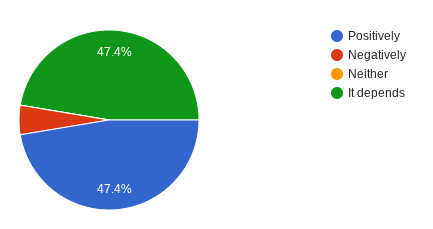
The pie chart above shows the responses to the question: If at all, how do you believe your participation in sports has affected your mental health?
by Veronica Holladay
Published March 20, 2026
Oshkosh West Index Volume 122 Issue VI