Festival offers musicians opportunity to step outside comfort zone of melody
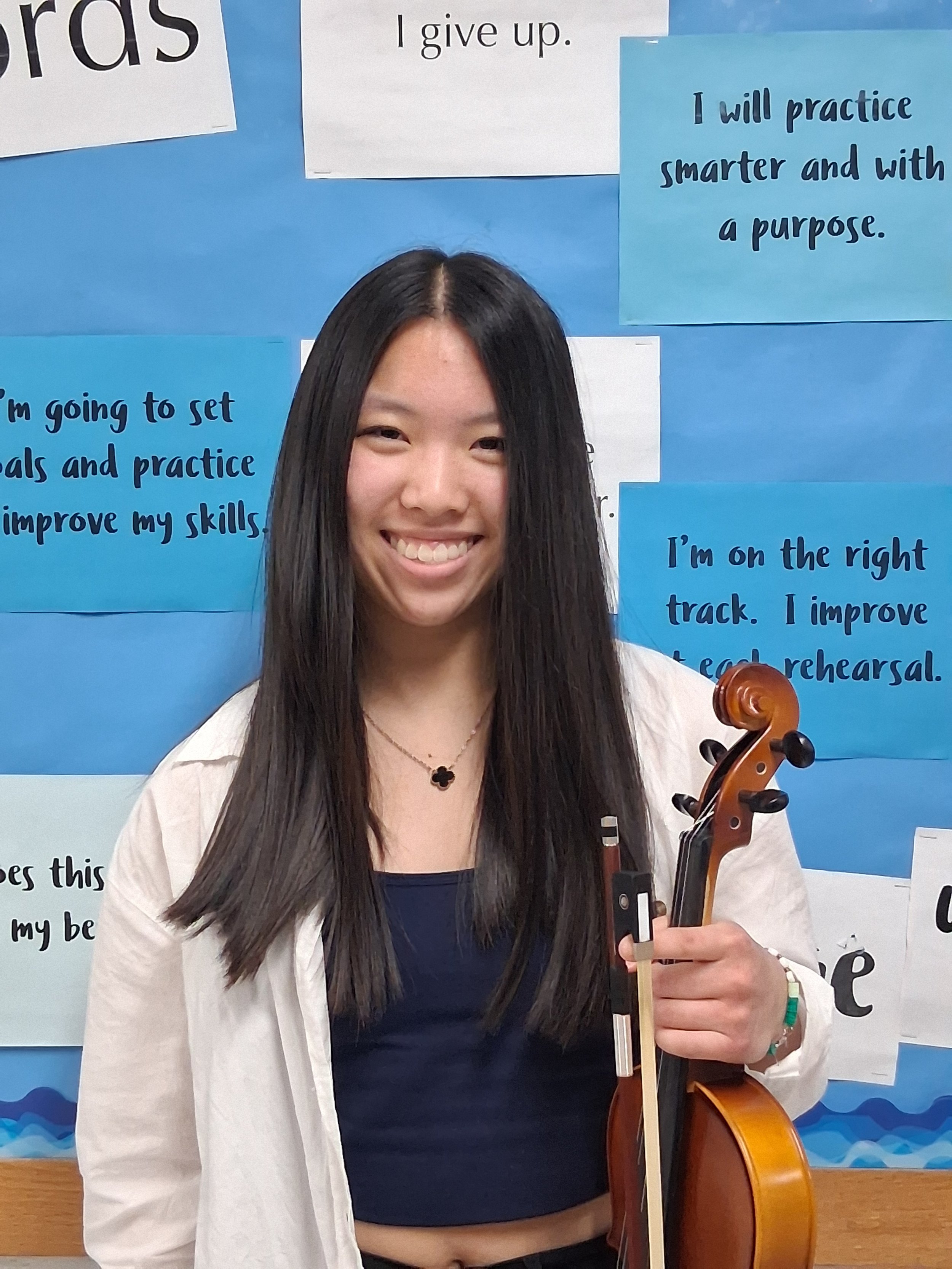
West will host the annual district WSMA solo and ensemble festival for the 2026 season this Saturday. With the festival just around the corner, students, staff, and volunteers alike are working hard to sharpen performances, organization, and time management skills. According to Malakai Flynn, one of the West band directors, the school is prepared to be packed with events.
“All music students from five schools (Oshkosh North, Oshkosh West, Neenah, Fond du Lac, Menasha) are going to be here at West to perform their pieces, which totals around 1,500 students,” he said. “The whole school will be used.”
The agreeable location of the 2026 festival benefits many West students. According to sophomore Anaiya Stevens, it’s helpful for busy lifestyles as it’s less time consuming.
“I like it being closer to home because we have busy lives and it’s very convenient,” she said. “I wish we could do it here every year.”
Other West students, such as sophomore Lanyah Norman, feel the school spirit when West has the ability to be a part of something bigger when it comes to the music department.
“I am very excited to have it take place here on our home turf,” she said. “It makes me feel proud and excited to become a bigger part of my music community and watch my peers and I take on leadership roles when the time comes around!”
Flynn explained that the location of the event rotates yearly between the five schools participating. This makes hosting at West a special occasion.
“Every year, the schools trade off because it’s on a rotating schedule,” he said. “For us, it's been since Covid,” he said. “Since it only happens around once every five years, hosting is a big deal. We get all hands on deck.”
In order to prepare, the entire West music department has been focusing on a balance of in-class work for concerts, and solo and ensemble practice days. Flynn explained that the band department specifically is trying to foster a sense of independence while still providing students with help when needed.
“We’ve been splitting our time up a lot. We (band) have an Orlando trip and the spring concert coming up, so there are two days a week that we’ve been doing full-group,” he said. “Otherwise, it’s independent work time where we try to check in with students and make sure that everyone’s comfy and making progress.”
Senior Henry Bongers believes that a load of independent work time isn’t always the best thing for everyone as a whole, as it can leave gaps in focus.
“For the people who do take solo and ensemble seriously and can work without constant supervision of a teacher, it can be beneficial,” he said. “But for those students that don’t focus on what they’re doing, I think whole group work would be a better use of time.”
According to Norman, orchestra tries to balance real-time practice with research assignments in order to prepare students for their performances at the WSMA festival.
“The OWHS orchestra has been taking class periods of the week to reflect and learn not only about the historical context of our pieces but working individually in class on our various solos and ensembles,” she said.
Junior Clover Stiefaver explained that the choir has been taking an approach that includes minimal in-class practice time in order to solidify individual practice. Though exclusively individual practice has its benefits, she believes that this may not be ideal for some students who rely on in-class practice for success at the festival.
“I like that solo and ensemble is meant to promote independence and practicing on your own. But I feel like choir has not been properly preparing students. This year, we’re trying a different approach by having very little time in-class to practice, maybe one or two days a month since we got our music,” she said. “This is well intentioned, I believe, but not all students have a safe environment to practice signing their pieces out loud outside of school.”
Generally, many see solo and ensemble as a mixed experience. According to Flynn it can be seen as a way to step out of a comfort zone and go into something bigger, but due to the shortened solo and ensemble time in school, students can hold animosity, but it helps students understand time management.
“If I’m honest, it gets some kids out of their comfort zone. Some students are definitely more comfortable within a section and the routine of everyday, but this forces time management and individual practice skills,” he said. “We try to provide students with resources, but a lot of it is figuring things out on your own.”
Norman is one of the many that recognizes this by seeing the struggles and accomplishments felt when learning new methods and techniques for playing violin.
“I am really enjoying learning how to go back and forth between time changes and tempos in my solo, it has been a joy and a challenge all in itself,” she said.
According to Flynn, solo and ensemble season is the time where instructors see the most improvement in skill and confidence throughout a year.
“My favorite thing about solo and ensemble is the massive growth of skills in students - that’s when people grow the most,” he said. “There’s nowhere to hide, especially if you’re doing a solo, so you have to take your skills and apply them to yourself.”
Overall, Norman speaks for many students in saying that solo and ensemble season is the perfect time to look ahead and prepare oneself for positive growth that, with effort, will flourish even after the performance is done.
“When it comes time to start the solo and ensemble process, I always feel generally excited and optimistic for what the next month has in store. And I believe that other students, not only in my class but throughout the department, feel similarly,” she said. “It is a time to reflect on your personal growth and learn something that may be out of your comfort zone and I find excitement in that. Music is worth revelry and I believe I am not the only one who thinks that.”
by Phoebe Fletcher
Published March 2, 2026
Oshkosh West Index Volume 122 Issue V