America provides cultural shock to German system
When I first came to America from Germany, I expected to have some culture shocks. I had heard about Walmart, the supermarket that was as big as soccer fields, or that Americans use inches and Fahrenheit instead of centimeters and Celsius. So, to be honest, I thought I was fully prepared for the American way of living when I stepped out of the airplane in Chicago. Guess what? I was wrong. Nobody could’ve prepared me for the real way Americans live, and how systems work differently here.
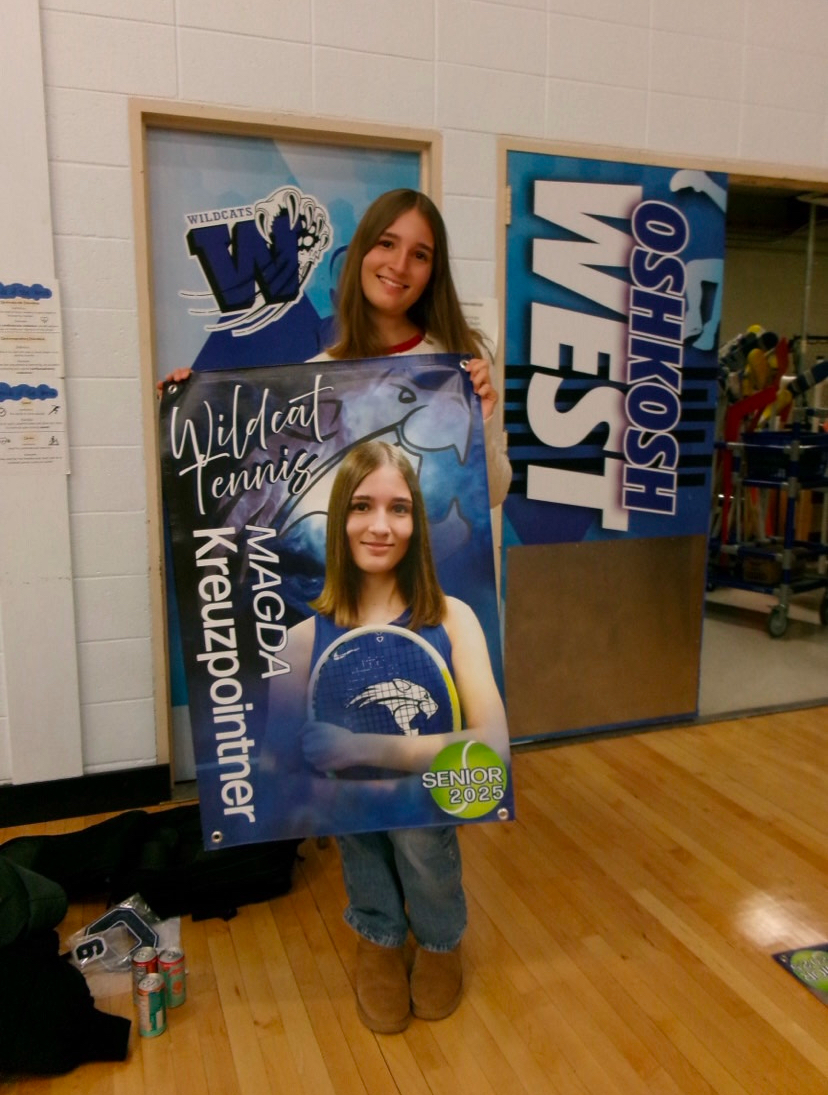
photo by Magda Kreuzpointner
In Germany, having the flag in a classroom or in your front yard is not something people do. We’re actually not even allowed to hang the flag with the official emblem on private property. That’s why I’ve never seen a German flag in a classroom before I came to the U.S. In my homeland, Bavaria, we have crosses in our schools but that’s pretty much it, especially because of our past. National pride is a very hot topic, so Germans are really cautious about patriotism and showing pride for their country on a regular basis. Although we have different ways to show pride, like during the soccer World Cup or the Olympics, we love to support our team and show who we’re standing behind. So when I first came here, I was shocked. Everywhere I went I ended up seeing the American flag. I saw it in schools, in front yards, during football games, literally everywhere. Then I heard the Pledge of Allegiance; I’ve never heard of anyone pledging to a flag before I came to America. I just didn’t know what it meant, and I questioned why people would display the flag anywhere and everywhere. However, I soon learned that this is part of the American identity. It’s normal to have the flag hanging in your front yard because it shows that you love your country and you’re connected with it.
Something else that was really different here than in my home country was the way school is managed. In Germany, you’re split up after fourth grade based on your GPA, and then you’re split into three different schools. The hardest one, the “Gymnasium,” is mostly all AP courses that would be preparing you for college. Then there’s also the “Realschule” and the “Mittelschule” which prepare you more for jobs that require a “dual education system.” It combines practical on-the-job training and a theoretical education that prepares you for jobs like carpentry or being a nurse. It’s a lot of hands-on and less theoretical altogether. You can still go to university, however, you would need to go to an extra school to be eligible.
Our curriculum also looks a lot different; for example, we don’t change from classroom to classroom, the teachers do. We’re separated into a class of 20 to 30 students with people our age and those classes mostly stay together for their high school years. We also don’t get a lot of choices over our curriculum. We have a strictly set curriculum. For example, in sixth grade I had 11 different subjects like Biology, German, English, Maths, and many more. In eleventh grade I had 14 different subjects since the amount of subjects gradually increased over the years. Now you might wonder how this fits into one schedule, well it may surprise you to hear that we don’t have the same classes everyday but a different schedule every day of the week; you could compare it a little to a university schedule here.
Something else that’s completely different in Germany is sports. Here in the US, you’re mostly practicing sports through high school or later on in university. In Germany, it works differently; we don’t really have high school teams. Sometimes we have soccer teams, but if we want to do a sport we have to do it outside of school through a sports club, where we pay a membership in order to continue playing. I was in shock when I went to my first football game and saw how many people came to support the team. We don’t have those kinds of sports events at schools in Germany. That is something that really impressed me, coming here and seeing the spirit created through sports. Since we don’t have these high school sports, we also don’t have state tournaments. I was really confused when our cross country team made it to state and they did the little parade around the school because I have never experienced it before in my home town.
There are lots of differences between Germany and the U.S. Realistically, I could go on and on writing about them, as there are so many other miniscule ones that make up the big picture of culture shocks that I’ve experienced in my time in America. `
by Magda Kreuzpointner
Published December 1, 2025
Oshkosh West Index Volume 122 Issue III