Ye trades in antisemitism for milquetoast mediocrity in flaccid ‘Bully’
On Monday, January 26, 2026, avid readers of the Wall Street Journal would have been surprised to see a peculiar, full page advertisement. It wasn’t for a strange product, or even an oddball event, but a letter, styled in basic typography titled simply, “To Those I’ve Hurt.” The letter came from none other than rapper, singer and producer, Ye (formerly known as Kanye West), who used his company, Yeezy, to broadcast an apology. This apology, one of many Ye has made, followed a multi-month tirade of antisemetic behaviour including the release of “Heil Hitler,” a song praising the German genocidal dictator. The letter claims that head trauma from a car accident, in conjunction with undiagnosed bipolar disorder, caused a manic episode of destructive behavior. Despite Ye’s professions of love for the Jewish and Black communities, the public was hesitant to accept his apology; the words were nice, but Ye’s real method of self expression has always been his music.
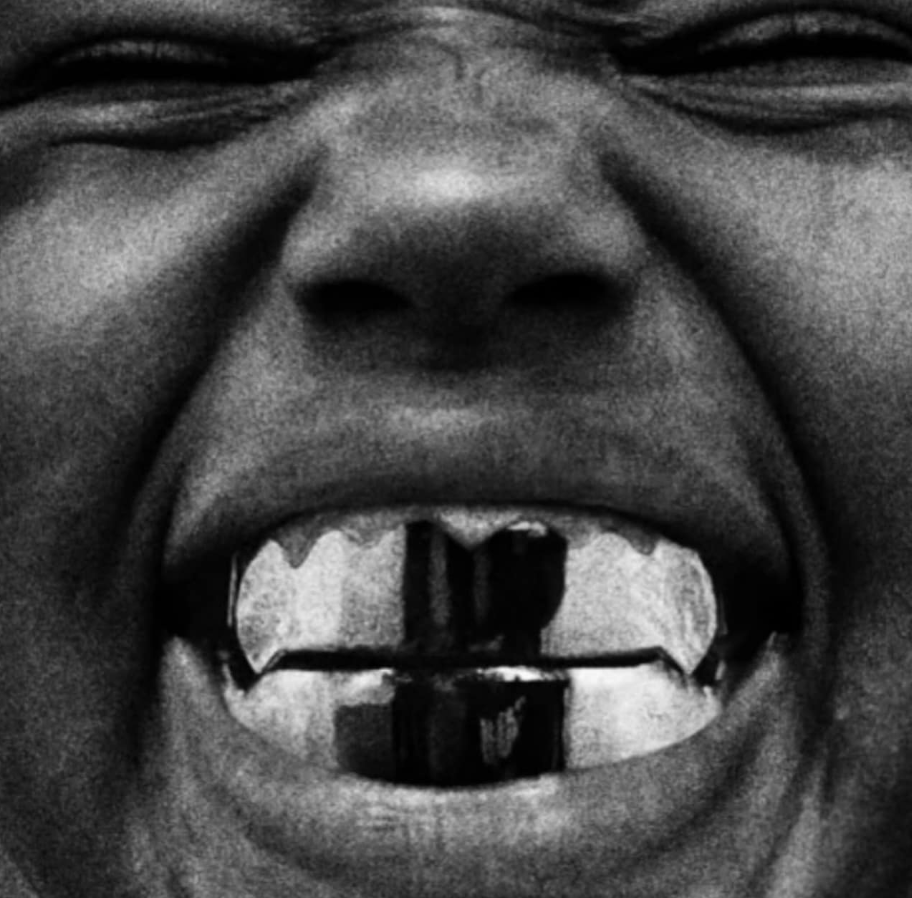
photo from Ye's Facebook page
Despite that, the 24-time Grammy winner has been on a sonic downturn as of late; Vultures 1 and Vultures 2 were eclectic and passionate, but ego-packed and angry. Donda 2 came across unfinished, and even more boisterous than before. This left a lot riding on Ye’s most recent March 27 release, Bully. As the first album post-apology, fans hesitantly hung on every note, hoping for a return to form. They were instead met with the most hollow, empty music that Ye has made in years, possibly ever.
Almost a year before Bully’s release, Ye surprise dropped the precursor, Bully V1 on March 18, 2025. Bully V1, which was released unfinished, as a set of demos, and still has yet to reach streaming, relied heavily on samples and interpolations, and uniquely incorporated artificial intelligence heavily into its production. Most of the vocals were not actually Ye himself, but AI deepfakes recreating his voice. It is hard to tell how much of Bully V1 seeped into Bully; Ye’s vocals, which are often autotuned beyond recognition may or may not actually be his own voice. Even if they are, it is ironic that Bully, where Ye is so obviously attempting to imitate his younger self, is founded in faux recreations. Ye has literally become a pale imitation of himself.
Bully’s opening track, “KING,” is a microcosm of disaster for the rest of the album. Ye attempts to be self-reflective, with lines claiming he was “drunk off power,” and while the words should ring true, they come across as manufactured. Ye is desperate to be liked and forgiven, but he still wants to be treated like the king. Ye has irreversibly tarnished one of the greatest legacies in hip-hop history, and even if he spends the rest of his life doing damage control, his reputation is forever stained. Obviously, people are not their worst mistakes, but when your worst mistake is being a Nazi, it becomes more challenging to forgive and forget.
On “FATHER” with Travis Scott, the comment section is packed with fans proclaiming the old Kanye is back, and if your ears were plugged, you might actually believe them. The beautiful samples Ye once warped to his will are now bastardized; he seems to be interpolating without any clear identity. He says “bye bye to my old self, wake up to the new me,” but who exactly is the new Ye? It seems Ye himself doesn’t know, as “FATHER”, like much of the album, lands somewhere in the undefined, murky ground between trap and rage. Ye even commits the ultimate crime of making Travis Scott rap without autotune in a pitifully forgettable verse.
Two of Bully’s few highlights come with “ALL THE LOVE” and “PUNCH DRUNK.” The former, featuring Andre Troutman, proves an epic soundtrack with booming synths and beautiful soprano vocals, and while Ye isn't really saying anything of substance, that might be for the best. The latter on the other hand samples the Clark Sisters “I Can Do All Things Through Christ” with a single eloquent and faithful verse from Ye that briefly addresses political stratification; it seems that no matter the era of Ye, his piety will always seep into the music.
Shortly after comes “SISTERS AND BROTHERS” which illustrates this project’s cardinal sin: It’s incredibly boring. Each song has its moment, where it’s supposed to be impactful and audiologically pleasing, but halfway through the project, it’s a struggle to remember a single thing that has happened. “SISTERS AND BROTHERS” is beyond milquetoast, nothing stands out, the song happens for a brief two and a half minutes, then it’s over. This is a stark contrast from the past Ye, where every other sentence was a quotable lyric. There were several years in which Ye had never made a bad song, and any track was a reasonable pick for somebody’s personal favorite, but now, if someone’s favorite song came off Bully, they probably need just as much mental help as Ye himself.
Glimpses of Ye’s 808s & Heartbreak peek through on songs like “WHITE LINES” and “DAMN,” where the production is just as juicy as it always was, with reverberating basslines and pitched up vocals. Still, these mimic emotional ballads feel disingenuous when Ye’s lyrical delivery is so nonplused. It sounds like he’s reading a script into the microphone at times.
Suffice to say, Bully is an unlistenable, unmotivated project which seems to make the wrong decision at every turn. It’s unclear if Ye really cares about making music anymore…for the last few records, it hasn’t been about the emotional power of the song, but rather spreading a message through the medium of lyricism and production. On Bully, it is clear, at the very least, that Ye is not headed in the direction of more Nazi music. Yet, having cleared that extremely low bar, he doesn’t reach much higher.
Grade: F
Ye’s newest album Bully leaves fans unsure whether he’s switching up his flow for a higher purpose, or he's just flat out lost his mind.
by Isaac Considine-Buelow
Published April 27, 2026
Oshkosh West Index Volume 122 Issue VII