Tomodachi proves second half life can be more than just a ‘dream’
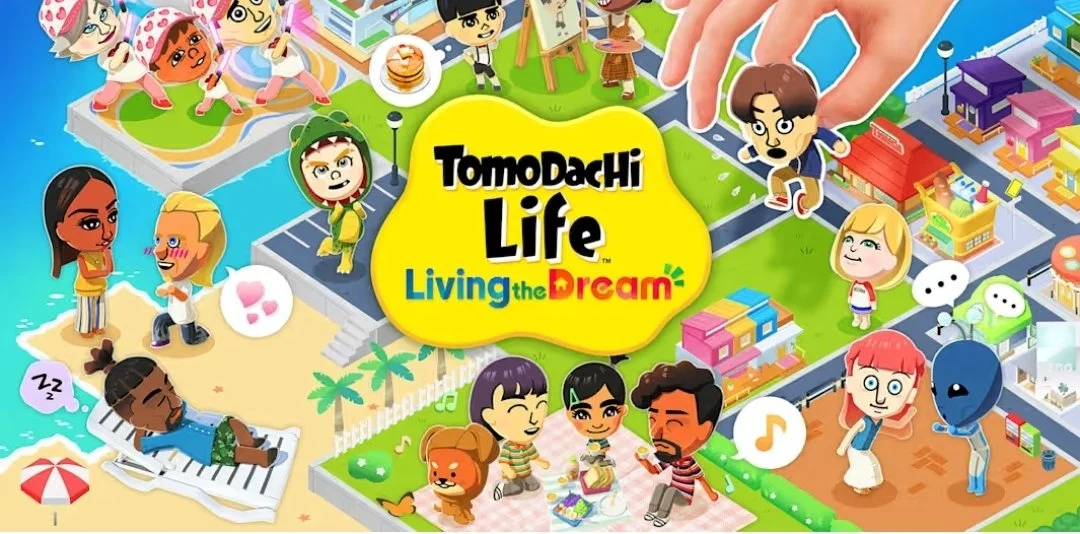
photo from Nintendo Game Store
Tomodachi Life: Living the Dream has arrived to succeed Tomodochi Life (2014) for the 3DS. Produced by Yoshio Sakamoto (Rhythm Heaven) and directed by Ryutaro Takahashi (WarioWare, Inc.: Mega Microgames!), the Tomodachi series are life-simulator games where players act as god-like beings, watching over their island and the creatures inhabiting it, coining Mii’s (created by the Wii) and caring over them whenever they’re in need.
Something the new game brings to the table is a significant increase in customization, as players are now able to create their own clothes, their own treasures (items that can be sold for money or given as gifts), their own rooms, and more. They also get to add a lot more of a personal flair to the Mii Maker, as in Tomodachi Life: Living the Dream, there are substantially more options than what’s been given in previous iterations, similar to that of Miitopia (2021). One big change that the game has undergone in its new iteration compared to its previous is that players can now edit the island to look however they want. Some may find this decision to be great, as they have more options for how they want to customize their specific island, but it may feel like the vast amount of customization options when it comes to creating the island are overwhelming. With having full control over the island, it loses its own identity, as the island from Tomodachi Life for the 3DS was iconic in its own regard, and islands in Tomodachi Life: Living the Dream come off as flat and square. However, one positive that could come from this is that instead of throwing all of the Miis in the same apartment complex, they are now allowed to have their own homes. Something that had to make up for the vast amount of customization additions was the Mii count, where previously players could hold up to 100 Miis on their island, in Tomodachi Life: Living the Dream: that value has now been bumped down to 70.
Dream doesn’t improve every single region, however, as there are cut features that didn’t make it from the previous title. The two biggest features that everyone brings up is the removal of the Bulletin Board, and the bigger one, the Concert Hall. The Bulletin Board was a nice spot on the island where you could check out various stats, such as how much money given to any specific Mii, how popular a specific Mii is, how an island ranks compared to other islands, etc. However, the biggest complaint for cut features is definitely the Concert Hall. This was a spot on the island where players could make their Miis sing a song with eight different choices for how they sounded, and were able to customize the lyrics to be whatever they wanted. With all the extra customization features that were added, it seems nonsensical to get rid of this one that many people had a lot of attachment for.
One thing Dream did right however, was add non-binary options for gender identification, as well as letting gay relationships be capable of occurring. In Tomodachi Life, LGBTQ+ relationships couldn’t happen, and this led to an outcry from the community. Nintendo of America went to various news outlets, such as NBC News, and IGN, and apologized for not including same-sex relationships and marriage, and promised to include them if there were any other installments of Tomodachi Life to come.
Ultimately, Dream stays true to its series, but some things get improved that didn’t really need much improvement, and it results in a game looking a little overcooked. While this article may come off as mostly complaining, there are only small things that need to be fixed in Tomodachi Life: Living the Dream. Many have wished for a sequel since the 3DS installment, and are very content with what Nintendo’s provided; however, there’s always room for more improvements through free DLC updates that Nintendo seems to like doing nowadays.
Grade: B+
While in every way Tomadachi Life: Living the Dream looks like an upgrade, some of these ‘upgrades’ can come off as too overwhelming.
by Matthew Stinski
Published May 26, 2026
Oshkosh West Index Volume 122 Issue VIII